
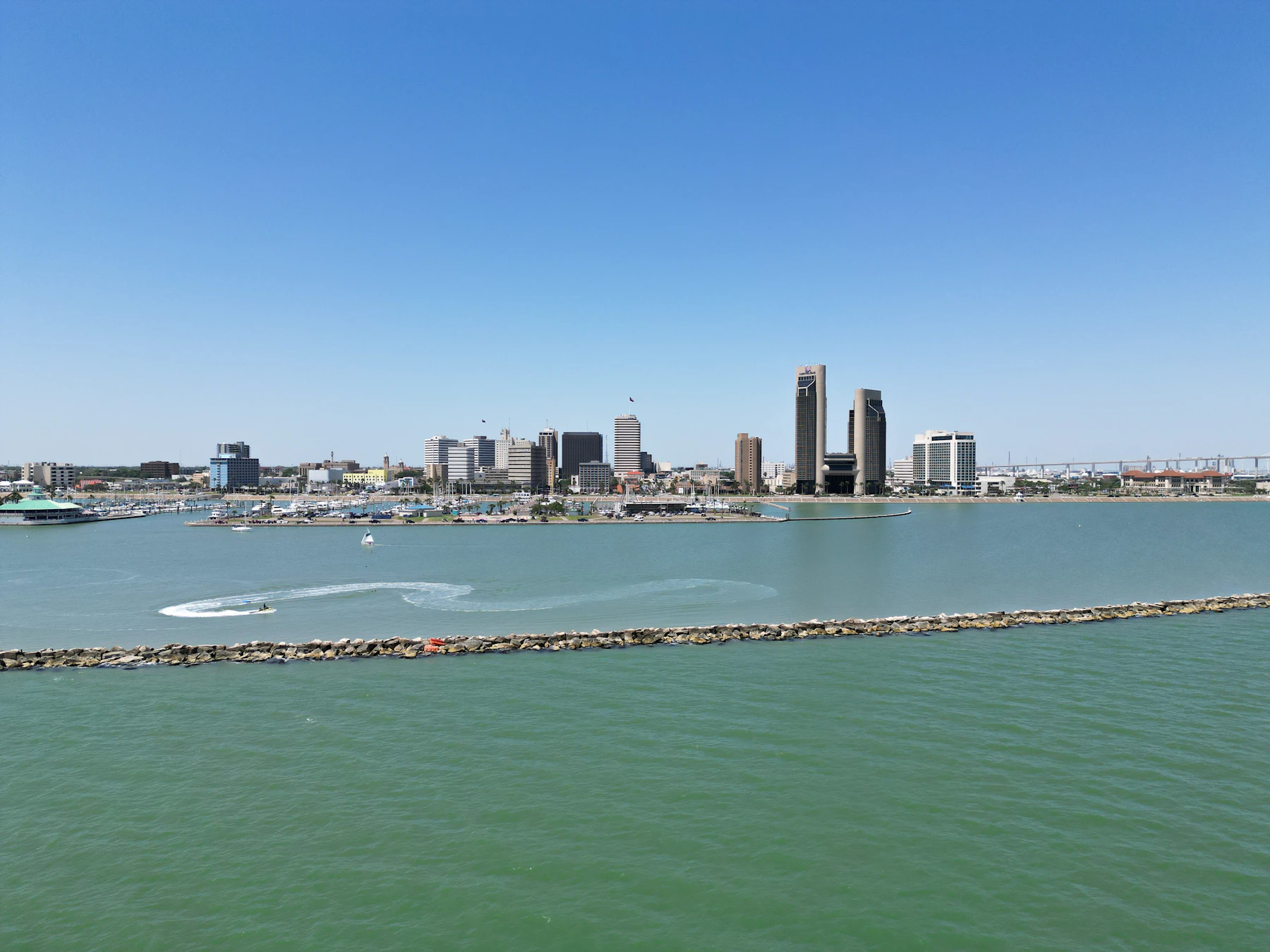
A $1 BILLION FIRST PHASE. A MUCH BIGGER BILL IF IT GROWS.
Corpus Christi needs more water—but the Inner Harbor proposal could put ratepayers on the hook for a costly project and send concentrated brine into the Ship Channel.
Explore the detailsWater security. Responsible costs. Healthy bays.
01 / The commitment
A first phase.
A lasting commitment.
The preliminary price for the first plant is nearly $1 billion. Discussed expansion scenarios could bring the total to roughly $3.6–$4 billion. Those later costs are not approved contracts, but they show how large the commitment could become.
- Preliminary first-plant price
- $1B
- Discussed expansion scenarios
- $3.6–4B
- Scenarios, not approved final costs.
We support a diversified water plan: groundwater, brackish water treatment, industrial reuse, conservation, and seawater desalination at a suitable location. Corpus Christi needs water security without an open-ended bill or avoidable risks to our bays.
The details.
A closer look at the water options, the costs, and what is at stake.
The City is advancing a broader water portfolio
The City describes its active groundwater and reuse investments as nearly $1 billion, with projects that could provide up to 76 million gallons per day in new supply or reduced demand as they come online. That is a target, not water already available. Reuse water is for industrial use; it does not go to homes as drinking water.
- Eastern and Western Well Fields
- Wells are producing; additional wells, monitoring, power upgrades, and connections are in progress.
- Brackish groundwater treatment
- Treatment and pipeline work are advancing to make more groundwater usable.
- Evangeline and Li Ranch
- Evangeline pipeline and pump station construction continues. Permits remain contested; the separate Li Ranch purchase depends on required permits.
- Industrial reuse
- The next construction phase is scheduled for May 2027. The full program targets up to 16 million gallons per day for industrial use.
Keep evaluating suitable seawater options
Harbor Island reached a permitting milestone in September 2026. The Port is providing the site, while the Nueces River Authority and IDE Technologies are developing the plant. The City has an option for water, but price, power, delivery infrastructure, and final purchase terms remain to be settled.
Barney Davis is also being evaluated with CPS Energy. Site planning, land terms, engineering, environmental review, and delivered water price still need to be worked out.
Why we oppose the Inner Harbor proposal
- High proposed cost
- The preliminary proposal for the first, roughly 30-million-gallon-per-day plant was nearly $1 billion.
- Expansion could raise the price further
- A discussed second phase could add 50 million gallons per day and move the brine outfall to the Gulf. Local estimates put the combined project at roughly $3.6–$4 billion. These are scenarios, not approved final costs.
- Ratepayer impact
- The City’s published model projected tens of millions of dollars in annual operating expenses and higher average residential water bills for the first plant. Power, maintenance, debt, and expansion could add pressure.
- Ship Channel discharge
- The proposed first plant would discharge concentrated brine into the Corpus Christi Ship Channel. Its effects on bay habitat depend on how the brine disperses; the bays matter to coastal wildlife, fishing, recreation, and local livelihoods.
Corpus Christi deserves a water plan with a clear full cost, manageable rate impacts, and careful consideration of the Coastal Bend.
Padre Island National Seashore
Photo: Joshua J. Cotten / Unsplash